
What is the meaning of CPLA bio-plastic?
Look closely at the white fork from your last takeout order or the lid on your morning coffee. If it feels like plastic but carries a "compostable" label, chances are you're holding CPLA, a material most people use every week without knowing what it is. This guide answers the most common questions about CPLA plastic, from its meaning to its real environmental impact. What does CPLA stand for? CPLA is short for Crystallized Polylactic Acid. Break the name apart and the story becomes clear. "Polylactic Acid" (PLA) is a bioplastic made by fermenting sugars from plants, usually corn starch or sugarcane, into lactic acid, which is then converted into a plastic-like polymer. "Crystallized" refers to an additional manufacturing step: PLA is blended with natural minerals like talc and heat-treated so its molecules reorganize into a crystalline structure. The result is a material that looks and feels like conventional plastic but starts in a farm field instead of an oil well. Why crystallize PLA in the first place? One word: heat. Standard PLA has an Achilles' heel: it softens and deforms at around 110–120°F, which makes it useless for hot coffee, soup, or fresh-from-the-fryer food. Crystallization raises that tolerance to approximately 185°F. That single upgrade transforms PLA from a cold-drink material into a workhorse for the food-service industry. It's also why you can spot the difference visually: PLA is typically clear (iced-drink cups), while CPLA is opaque white or beige (cutlery, hot lids, soup bowls). Is CPLA safe for hot food and drinks? Yes. CPLA is food-safe and free of BPA, phthalates, and other additives commonly associated with petroleum plastics. Its heat tolerance means it won't leach, warp, or melt when it comes into contact with hot beverages or meals within its rated temperature range. This is precisely why cafés and restaurants across the US rely on CPLA cutlery and hot cup lids as everyday replacements for polystyrene and polypropylene. Does CPLA actually break down, or is that greenwashing? This is where nuance matters. CPLA genuinely composts, but only in industrial composting facilities, where sustained temperatures of 131–160°F, controlled moisture, and active microbes break it down in roughly 60 to 90 days. Toss it in your backyard bin, and it will barely change for years. Send it to a landfill, and the conditions it needs simply don't exist. So the material isn't greenwashing, but careless disposal can undermine its benefits. The fix: Look for the BPI certification (based on ASTM D6400) on the product. Locate a commercial composter near you through your municipality or FindAComposter.com. Should your business make the switch? If you serve hot food or drinks with single-use items, CPLA deserves a serious look. It's made from renewable resources, performs on par with conventional plastic, and helps you stay ahead of the single-use plastic bans expanding across US states and cities. It also gives your sustainability messaging real substance — a certified compostable product, not a vague eco-claim. CPLA plastic meaning, in short CPLA means Crystallized Polylactic Acid: plant-based PLA that's been mineral-blended and heat-treated for strength and heat resistance. It's food-safe up to about 185°F, certified commercially compostable, and already sitting in millions of American coffee cups and takeout bags. Now that you know its meaning, you'll never look at that little white fork the same way again.
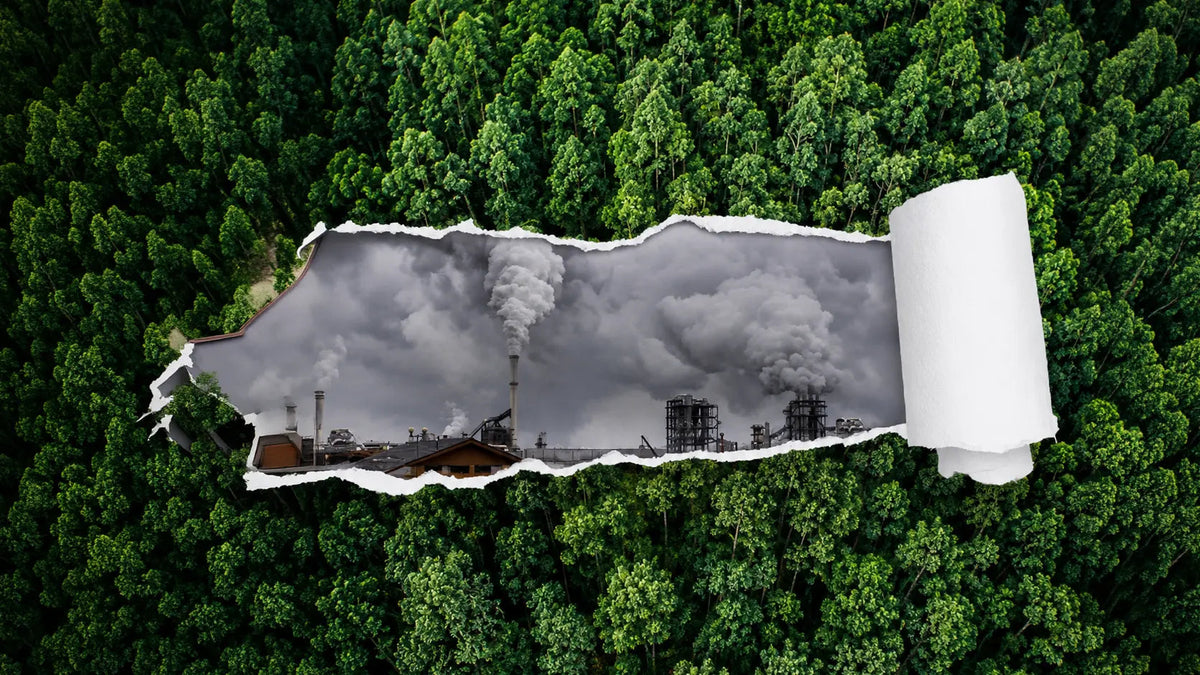
Beyond the green claim: Why certifications protect Food Service brands from greenwashing risk
"Eco-friendly." "Earth-conscious." "Green." Walk through any wholesale catalog of disposables and you'll find these claims on nearly every page. But here's the uncomfortable truth for food service operators: most of these terms have no legal definition, no testing behind them, and no third-party verification.

What is the difference between compostable and commercially compostable?
You grab a coffee cup labeled "compostable" and feel good about your choice. But when you get home, a question pops up: can you actually toss it in your backyard compost bin? The answer depends on one crucial detail, whether that item is home compostable or commercially compostable. Understanding the difference helps you dispose of products correctly and avoid unintentionally sending "green" packaging to a landfill. What does "Compostable" actually mean? A compostable product is designed to break down into natural elements — water, carbon dioxide, and nutrient-rich biomass, without leaving toxic residue behind. However, "compostable" is an umbrella term, and not all compostable materials break down under the same conditions. That's where the two main categories come in: home compostable and commercially (or industrially) compostable. Home compostable: Backyard-friendly breakdown Home compostable products are engineered to decompose in the conditions of a typical backyard compost pile, lower temperatures (usually 68–86°F), variable moisture, and slower microbial activity. Think of items like uncoated paper, certain plant-based films, food scraps, and yard trimmings. Because backyard piles are less controlled, home compostable materials must be able to break down without any special help, typically within 6 to 12 months. Certifications like TÜV Austria's "OK compost HOME" indicate a product has been tested for these real-world conditions. Commercially compostable: Built for industrial facilities Commercially compostable products require the conditions of an industrial composting facility to fully decompose. These facilities maintain sustained high temperatures (131–160°F), controlled humidity, regular aeration, and specialized microbial activity that a backyard pile simply can't replicate. Common examples include PLA (polylactic acid) cups, bioplastic cutlery, compostable coffee pods, and many food-service containers. In the United States, the BPI (Biodegradable Products Institute) certification, based on ASTM D6400 and ASTM D6868 standards, is the most recognized label for commercially compostable items. Here's the catch: if a commercially compostable cup ends up in your backyard bin, it may sit there for years, barely changing. And if it ends up in a landfill, it can't break down properly either. Key differences at a glance The distinction comes down to three factors. First, temperature: industrial facilities reach heat levels a home pile never will. Second, time: commercial composting breaks materials down in weeks, while home composting takes months. Third, infrastructure: commercially compostable items depend on access to a facility — and only a fraction of US communities currently offer curbside compost collection. How to dispose of each one correctly Before tossing a compostable item, check the label. If it says "home compostable" or carries the OK compost HOME seal, your backyard bin is fine. If it's BPI-certified or simply says "compostable," it likely needs an industrial facility. Use resources like FindAComposter.com or check with your local municipality to see if commercial composting is available near you. If it isn't, contact the brand — many companies offer mail-back programs. "Compostable" doesn't automatically mean backyard ready. Home compostable products break down naturally in your own pile, while commercially compostable items need the high heat and controlled conditions of an industrial facility. Knowing the difference — and reading certifications like BPI and OK compost HOME, ensures your eco-friendly choices actually deliver on their promise. When in doubt, check the label, check your local facilities, and compost with confidence. Check with your local composting program to confirm which certified compostable products are accepted in your area. All wecare® products are certified commercially compostable and designed for industrial composting facilities. Not suitable for home composting.

What is the meaning of CPLA bio-plastic?
Look closely at the white fork from your last takeout order or the lid on your morning coffee. If it feels like plastic but carries a "compostable" label, chances are you're holding CPLA, a material most people use every week without knowing what it is. This guide answers the most common questions about CPLA plastic, from its meaning to its real environmental impact. What does CPLA stand for? CPLA is short for Crystallized Polylactic Acid. Break the name apart and the story becomes clear. "Polylactic Acid" (PLA) is a bioplastic made by fermenting sugars from plants, usually corn starch or sugarcane, into lactic acid, which is then converted into a plastic-like polymer. "Crystallized" refers to an additional manufacturing step: PLA is blended with natural minerals like talc and heat-treated so its molecules reorganize into a crystalline structure. The result is a material that looks and feels like conventional plastic but starts in a farm field instead of an oil well. Why crystallize PLA in the first place? One word: heat. Standard PLA has an Achilles' heel, it softens and deforms at around 110–120°F, which makes it useless for hot coffee, soup, or fresh-from-the-fryer food. Crystallization raises that tolerance to approximately 185°F. That single upgrade transforms PLA from a cold-drink material into a workhorse for the food-service industry. It's also why you can spot the difference visually: PLA is typically clear (iced-drink cups), while CPLA is opaque white or beige (cutlery, hot lids, soup bowls). Is CPLA safe for hot food and drinks? Yes. CPLA is food-safe and free of BPA, phthalates, and other additives commonly associated with petroleum plastics. Its heat tolerance means it won't leach, warp, or melt when it comes into contact with hot beverages or meals within its rated temperature range. This is precisely why cafés and restaurants across the US rely on CPLA cutlery and hot cup lids as everyday replacements for polystyrene and polypropylene. Does CPLA actually break down or is that greenwashing? This is where nuance matters. CPLA genuinely composts, but only in industrial composting facilities, where sustained temperatures of 131–160°F, controlled moisture, and active microbes break it down in roughly 60 to 90 days. Toss it in your backyard bin, and it will barely change for years. Send it to a landfill, and the conditions it needs simply don't exist. So the material isn't greenwashing, but careless disposal can undermine its benefits. The fix: look for the BPI certification (based on ASTM D6400) on the product and locate a commercial composter near you through your municipality or FindAComposter.com. Should your business make the switch? If you serve hot food or drinks with single-use items, CPLA deserves a serious look. It's made from renewable resources, performs on par with conventional plastic, and helps you stay ahead of the
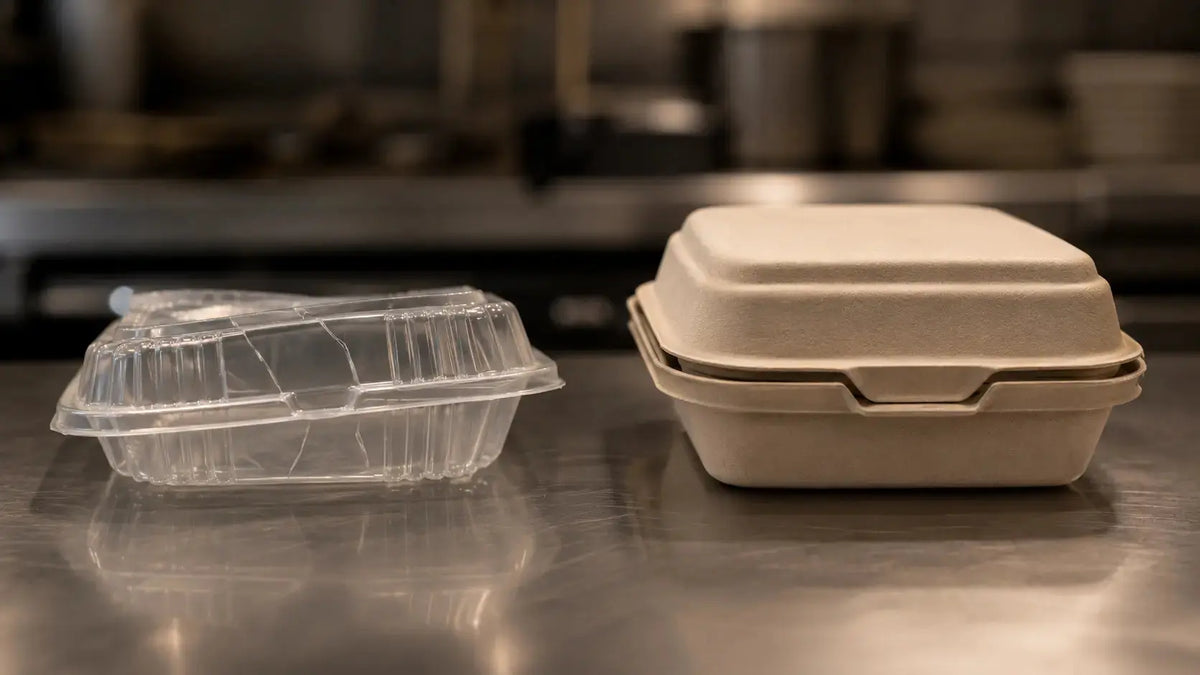
The real cost of cheap disposables — why low-price packaging is costing your restaurant more than you think
When you're running a restaurant, every line item matters. So when a supplier offers takeout containers at rock-bottom prices, it feels like a smart move. Lower cost per unit, same function, more margin. Except that's rarely how it plays out in practice. Cheap disposables have a pattern that most operators recognize only after they've lived it. Containers that crack when customers open them. Lids that don't seal properly, leading to spill complaints and refund requests. Cups that buckle with hot liquids. Cutlery that snaps on the first bite. Each one of these failures has a cost — and it's never just the cost of the product itself. There's the direct cost of replacing the item or remaking the order. There's the labor cost of handling the complaint. There's the reputational cost when a customer posts a photo of a broken container leaking into their bag. And there's the hidden operational cost of constantly switching suppliers because the last batch was inconsistent with the one before. Performance matters in foodservice packaging because the container is the last touchpoint between your kitchen and your customer. A container that holds up — that keeps food hot, resists moisture, stacks cleanly, and opens without fighting — protects the experience you worked hard to create inside your kitchen. Certified compostable products engineered for commercial use are built to a different standard. Bagasse fiber containers are naturally heat-resistant and microwave-safe. PLA-lined cups handle hot beverages without deforming. Bio-CPLA cutlery is designed for heavy-duty use, not decorative place settings. The math changes when you factor in fewer replacements, fewer complaints, consistent supply quality, and a sustainability story that actually strengthens your brand instead of exposing it to greenwashing risks. The cheapest product on the invoice isn't always the cheapest product in your operation. The right question isn't "what does this container cost?" — it's "what does this container cost me when it fails?" At wecare®, our products are BPI Certified, ASTM D6400 compliant, and engineered to perform under real commercial kitchen conditions. Because packaging that works the first time is always cheaper than packaging you have to apologize for.

What the FTC Green Guides mean for your restaurant's packaging claims
Most restaurant owners don't think about federal advertising regulations when they order takeout containers. But if your packaging says "eco-friendly," "green," or "compostable" anywhere — on the box, on your website, on your Instagram — the Federal Trade Commission has something to say about it. The FTC's Green Guides (16 CFR Part 260) establish the rules for environmental marketing claims in the United States. Section 260.7 specifically addresses compostability claims and requires that businesses clearly disclose whether a product is suitable for home composting, industrial composting, or both. If your packaging is only compostable in industrial facilities — which is the case for most certified foodservice products — you need to say so. Explicitly. Why should a restaurant operator care? Because the liability doesn't stay with the manufacturer. If your brand promotes packaging as "compostable" without proper qualification, your business could face regulatory action, consumer complaints, or reputational damage. The FTC has increasingly targeted greenwashing across industries, and foodservice is no exception. The good news is that compliance isn't complicated when you work with the right supplier. Products that carry BPI Certification and meet ASTM D6400 standards come with clear, documented claims that you can confidently communicate to your customers. The certification does the heavy lifting — you just need to make sure your messaging matches the documentation. Here's a practical checklist for your operation: verify that every compostable product you purchase has independent third-party certification. Make sure your in-store signage and digital content specify "commercially compostable in industrial composting facilities only." And keep certification documentation accessible in case a customer, auditor, or regulator asks for it. Transparency isn't a burden — it's a competitive advantage. Customers trust brands that tell them exactly what they're getting, not brands that hide behind vague language and hope nobody asks questions. At wecare®, every product ships with full FTC Section 260.7 compliant language, BPI Certification documentation, and ASTM D6400 compliance records. Because credible sustainability claims start with verifiable evidence, not marketing slogans.

How Foodservice operators switch to compostable packaging without hurting margins.
The number one reason foodservice operators hesitate to switch to compostable packaging is cost. And it's a fair concern — single-use compostable products have historically carried a premium over conventional plastic alternatives. But the conversation has changed significantly in recent years, and operators who've made the switch are finding that the financial case is stronger than they expected. Here's a practical framework for making the transition without hurting your margins. Step 1: Audit your current packaging spend Before comparing prices, you need to know exactly what you're spending today. Most operators are surprised to find they're using 8 to 12 different packaging SKUs across their operation — many of which overlap in function. Map out every container, cup, bowl, lid, and utensil you're currently purchasing. Note the cost per unit, the supplier, and the volume you order. This baseline gives you the data to make an honest comparison when you start evaluating compostable alternatives. Step 2: Don't switch everything at once The most common mistake operators make is trying to convert their entire packaging program overnight. Start with your highest-visibility items — the products your customers actually see and touch. Typically, that means cups, to-go containers, and cutlery. These are the items that drive customer perception of your sustainability commitment. Switching them first delivers the most visible impact while you evaluate compostable alternatives for the rest of your lineup. Step 3: Order in volume Compostable packaging unit costs drop significantly at volume. If you're currently ordering small quantities on an as-needed basis, you're paying the highest possible price per unit. Most compostable suppliers — including wecare® — offer tiered pricing that rewards volume purchasing with substantially lower per-unit costs. Run a 90-day projection of your packaging consumption across your top SKUs and use that volume to negotiate your pricing. The difference between small-batch and volume pricing can be 20 to 35 percent — enough to close most of the gap between conventional and compostable. Step 4: Factor in the full cost The price comparison between conventional plastic and compostable packaging often ignores several real costs on the plastic side. Waste hauling fees, compliance costs in states with active packaging regulations, and the reputational cost of being behind the curve on sustainability all factor into the true cost of staying with plastic. In states like California, Colorado, and Washington — where packaging regulations are actively evolving — operators who've already made the switch face zero compliance risk and zero switching cost down the road. Step 5: Use sustainability as a revenue driver Compostable packaging isn't just a cost — it's a marketing asset. Restaurants and cafeterias that communicate their compostable commitment clearly see measurable returns in customer loyalty, press coverage, and B2B contract wins with corporate clients and institutions that have formal sustainability requirements for their food vendors. Add the BPI certification seal to your packaging, mention it on your menu, and communicate it through your social channels. The investment in compostable packaging becomes part of your brand story — and brand stories drive repeat business. The wecare approach At wecare®, we've built our entire catalog around making certified compostable packaging financially viable for real foodservice operations — not just large chains with sustainability budgets. Volume pricing, flexible minimums, and a dedicated account team mean you can make the switch at the pace that works for your operation. Ready to run the numbers? Request a wholesale quote and we'll build a pricing proposal based on your actual volume. All wecare® products are BPI-certified and commercially compostable. Designed for industrial composting facilities. Not suitable for home composting. Check with your local composting program for availability.
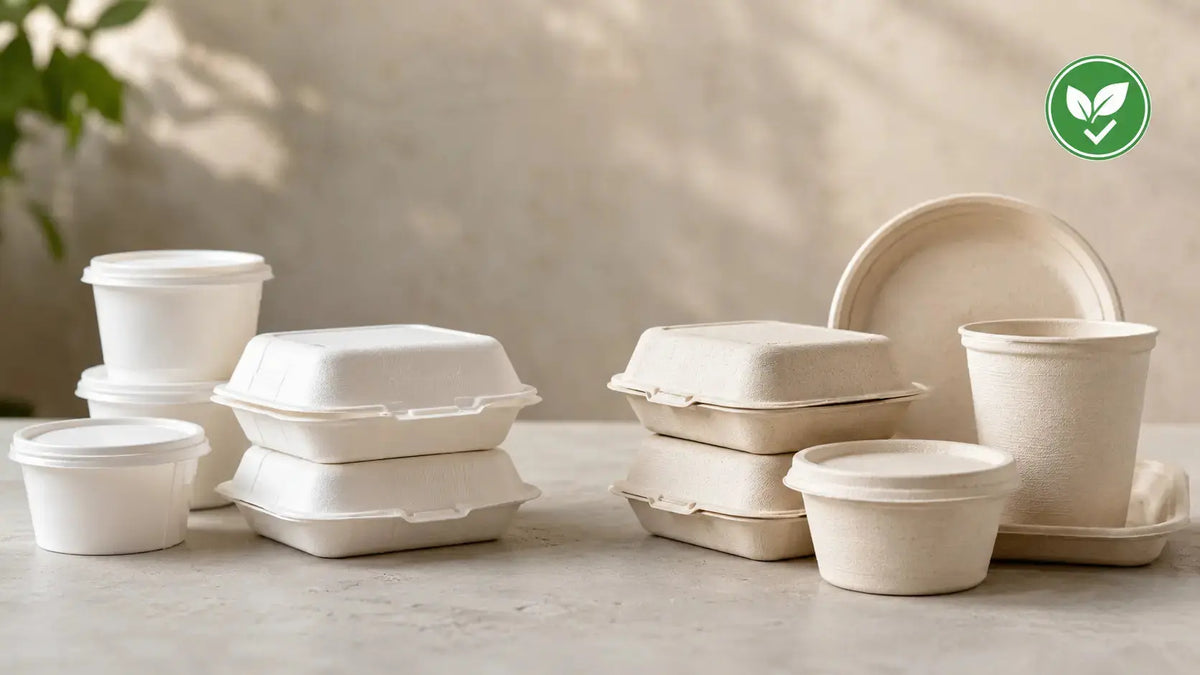
Biodegradable vs Compostable Packaging. What restaurants need to know.
If you've been shopping for sustainable packaging for your restaurant, you've probably seen both terms on the label — biodegradable and compostable. They sound similar. They're often used interchangeably. But for a foodservice operator making purchasing decisions, the difference between the two is significant — and getting it wrong can cost you time, money, and credibility with your customers. What does biodegradable actually mean? Biodegradable simply means that a material can be broken down by bacteria, fungi, or other living organisms over time. The key word here is time — because almost everything biodegrades eventually, including plastic. A biodegradable product offers no guarantee of how long that process takes, where it needs to happen, or what it leaves behind. In practice, a product labeled "biodegradable" may take years to break down in a standard landfill, and may release methane gas in the process. It's not a certification — it's a characteristic. And without third-party verification, it's a term that can be applied very loosely. For restaurants, this matters because your guests are paying attention. A biodegradable claim without substantiation can come across as vague — and eco-conscious diners are increasingly skeptical of unverified green claims. What does compostable mean? Compostable packaging meets a much higher and more specific bar. A certified compostable product is designed to break down into non-toxic components — water, carbon dioxide, and organic matter — within a defined timeframe, under specific composting conditions. There are two types of compostability worth knowing: Home compostable products break down in a backyard compost pile. These are less common in foodservice. Commercially compostable products — like all wecare® packaging — are designed to be processed in industrial composting facilities, where higher temperatures and controlled conditions accelerate the breakdown process. This is the standard for most certified compostable foodservice products in the U.S. market. The gold standard certification for commercially compostable products in the United States is BPI (Biodegradable Products Institute), which verifies compliance with ASTM D6400 or ASTM D6868 standards. When you see the BPI seal, you know the product has been tested and verified — not just labeled. Why this matters for your restaurant? Choosing certified compostable over simply "biodegradable" packaging gives your operation three concrete advantages: Verified sustainability claims. BPI certification and ASTM compliance give you documentation to back up your sustainability program — important for corporate clients, catering contracts, and franchise operations that require supplier verification. Composting program compatibility. Many municipal and commercial composting programs in California, Colorado, Texas, and Florida only accept BPI certified products. If your packaging isn't certified, it may be rejected at the facility — and end up in a landfill anyway. Customer trust. Today's restaurant guest researches brands. A certified compostable claim backed by a third-party seal carries far more weight than a generic "biodegradable" label. The bottom line for operators Not all green packaging is created equal. Biodegradable is a starting point — compostable is a commitment. When evaluating packaging suppliers, look for BPI certification, ASTM compliance, and clear language specifying whether the product is suitable for industrial composting facilities. At wecare®, every product in our catalog is BPI-certified and commercially compostable — giving your operation the documentation, the performance, and the sustainability credentials your customers and partners expect. Check with your local composting program to confirm which certified compostable products are accepted in your area. All wecare® products are certified commercially compostable and designed for industrial composting facilities. Not suitable for home composting.