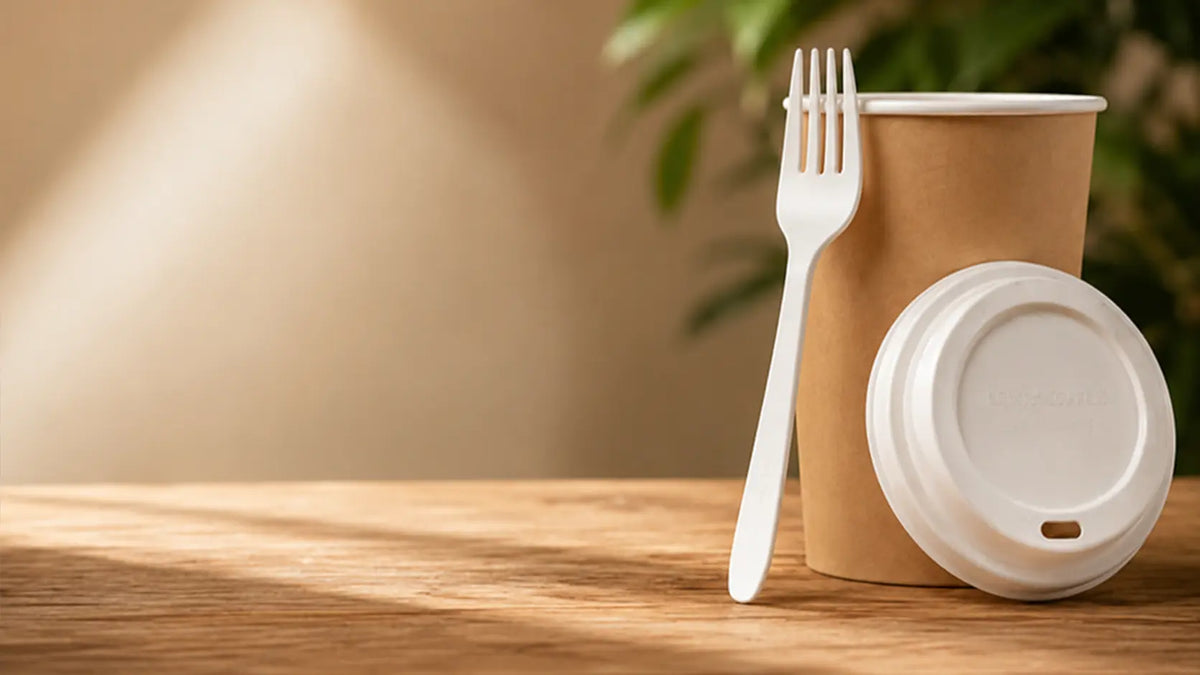
Look closely at the white fork from your last takeout order or the lid on your morning coffee. If it feels like plastic but carries a "compostable" label, chances are you're holding CPLA, a material most people use every week without knowing what it is. This guide answers the most common questions about CPLA plastic, from its meaning to its real environmental impact.
What does CPLA stand for?
CPLA is short for Crystallized Polylactic Acid. Break the name apart and the story becomes clear. "Polylactic Acid" (PLA) is a bioplastic made by fermenting sugars from plants, usually corn starch or sugarcane, into lactic acid, which is then converted into a plastic-like polymer. "Crystallized" refers to an additional manufacturing step: PLA is blended with natural minerals like talc and heat-treated so its molecules reorganize into a crystalline structure.
The result is a material that looks and feels like conventional plastic but starts in a farm field instead of an oil well.
Why crystallize PLA in the first place?
One word: heat. Standard PLA has an Achilles' heel, it softens and deforms at around 110–120°F, which makes it useless for hot coffee, soup, or fresh-from-the-fryer food. Crystallization raises that tolerance to approximately 185°F.
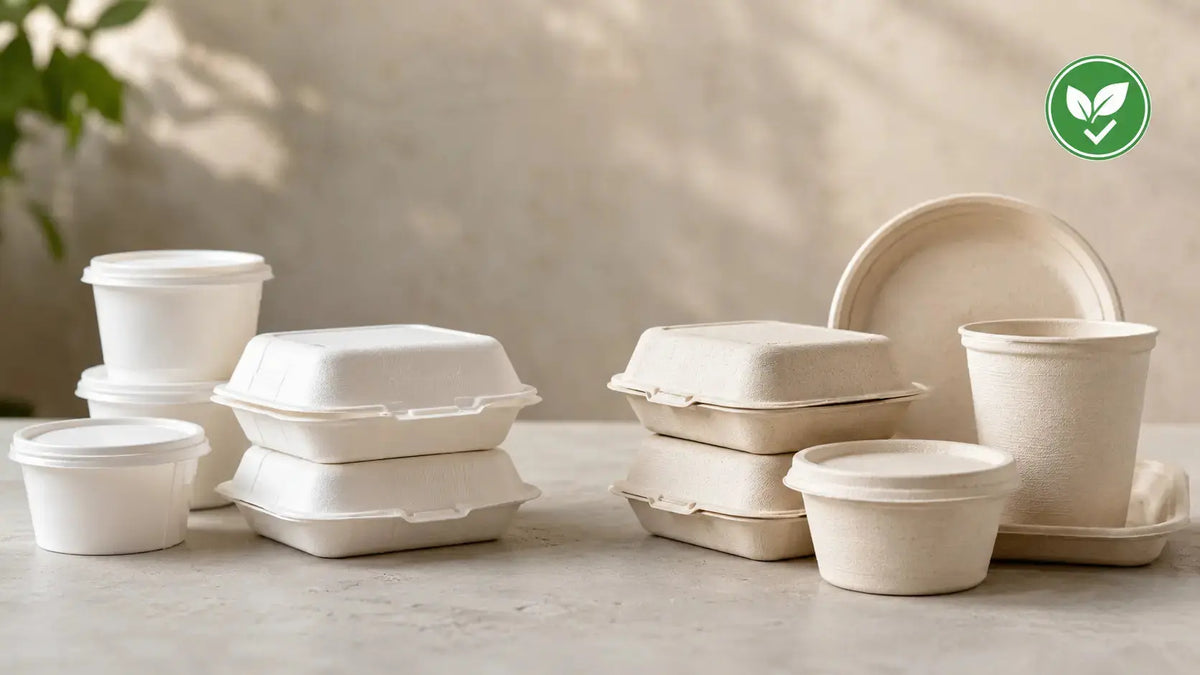
That single upgrade transforms PLA from a cold-drink material into a workhorse for the food-service industry. It's also why you can spot the difference visually: PLA is typically clear (iced-drink cups), while CPLA is opaque white or beige (cutlery, hot lids, soup bowls).
Is CPLA safe for hot food and drinks?
Yes. CPLA is food-safe and free of BPA, phthalates, and other additives commonly associated with petroleum plastics. Its heat tolerance means it won't leach, warp, or melt when it comes into contact with hot beverages or meals within its rated temperature range. This is precisely why cafés and restaurants across the US rely on CPLA cutlery and hot cup lids as everyday replacements for polystyrene and polypropylene.
Does CPLA actually break down or is that greenwashing?
This is where nuance matters. CPLA genuinely composts, but only in industrial composting facilities, where sustained temperatures of 131–160°F, controlled moisture, and active microbes break it down in roughly 60 to 90 days.
Toss it in your backyard bin, and it will barely change for years. Send it to a landfill, and the conditions it needs simply don't exist. So the material isn't greenwashing, but careless disposal can undermine its benefits. The fix: look for the BPI certification (based on ASTM D6400) on the product and locate a commercial composter near you through your municipality or FindAComposter.com.
Should your business make the switch?
If you serve hot food or drinks with single-use items, CPLA deserves a serious look. It's made from renewable resources, performs on par with conventional plastic, and helps you stay ahead of the