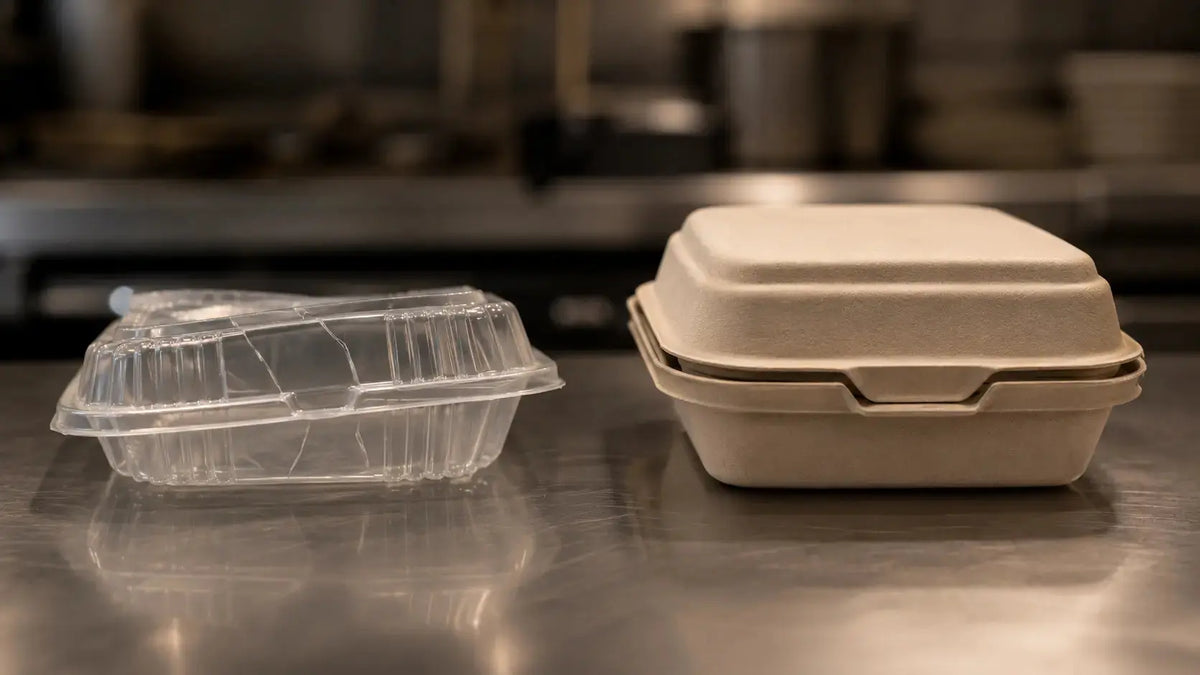
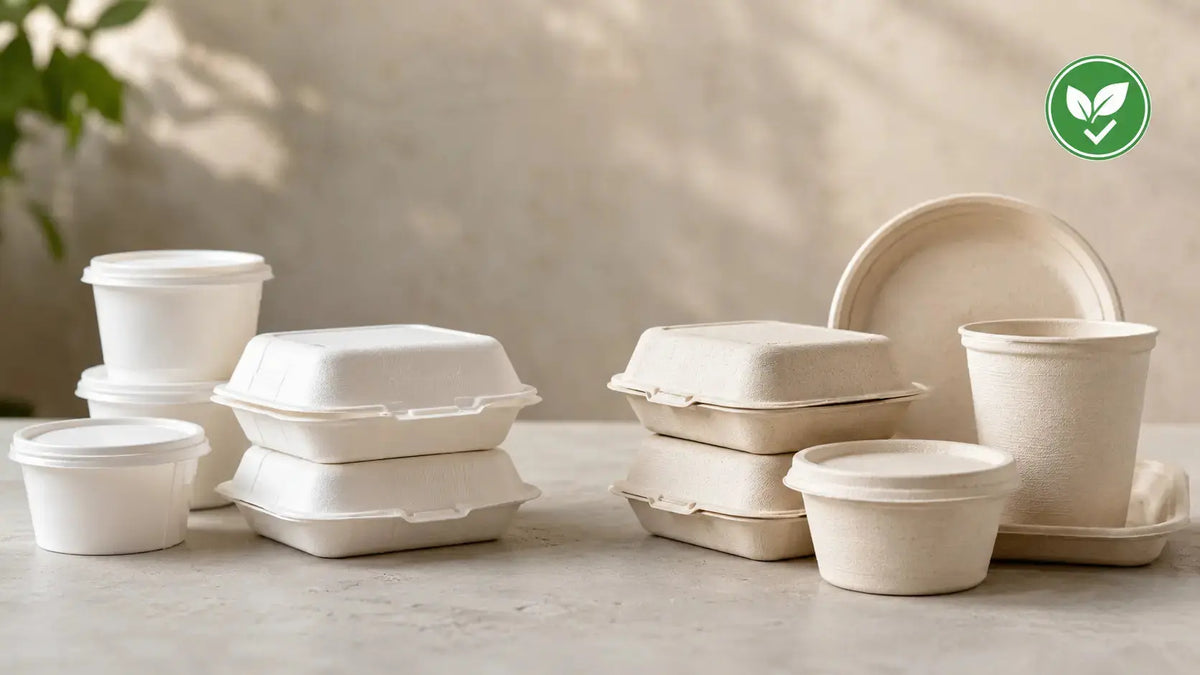
If you've been shopping for sustainable packaging for your restaurant, you've probably seen both terms on the label — biodegradable and compostable. They sound similar. They're often used interchangeably. But for a foodservice operator making purchasing decisions, the difference between the two is significant — and getting it wrong can cost you time, money, and credibility with your customers.
What does biodegradable actually mean?
Biodegradable simply means that a material can be broken down by bacteria, fungi, or other living organisms over time. The key word here is time — because almost everything biodegrades eventually, including plastic. A biodegradable product offers no guarantee of how long that process takes, where it needs to happen, or what it leaves behind.
In practice, a product labeled "biodegradable" may take years to break down in a standard landfill, and may release methane gas in the process. It's not a certification — it's a characteristic. And without third-party verification, it's a term that can be applied very loosely.
For restaurants, this matters because your guests are paying attention. A biodegradable claim without substantiation can come across as vague — and eco-conscious diners are increasingly skeptical of unverified green claims.
What does compostable mean?
Compostable packaging meets a much higher and more specific bar. A certified compostable product is designed to break down into non-toxic components — water, carbon dioxide, and organic matter — within a defined timeframe, under specific composting conditions.
There are two types of compostability worth knowing:
- Home compostable products break down in a backyard compost pile. These are less common in foodservice.
- Commercially compostable products — like all wecare® packaging — are designed to be processed in industrial composting facilities, where higher temperatures and controlled conditions accelerate the breakdown process. This is the standard for most certified compostable foodservice products in the U.S. market.
The gold standard certification for commercially compostable products in the United States is BPI (Biodegradable Products Institute), which verifies compliance with ASTM D6400 or ASTM D6868 standards. When you see the BPI seal, you know the product has been tested and verified — not just labeled.
Why this matters for your restaurant?
Choosing certified compostable over simply "biodegradable" packaging gives your operation three concrete advantages:
- Verified sustainability claims. BPI certification and ASTM compliance give you documentation to back up your sustainability program — important for corporate clients, catering contracts, and franchise operations that require supplier verification.
- Composting program compatibility. Many municipal and commercial composting programs in California, Colorado, Texas, and Florida only accept BPI certified products. If your packaging isn't certified, it may be rejected at the facility — and end up in a landfill anyway.
- Customer trust. Today's restaurant guest researches brands. A certified compostable claim backed by a third-party seal carries far more weight than a generic "biodegradable" label.
The bottom line for operators
Not all green packaging is created equal. Biodegradable is a starting point — compostable is a commitment. When evaluating packaging suppliers, look for BPI certification, ASTM compliance, and clear language specifying whether the product is suitable for industrial composting facilities.
At wecare®, every product in our catalog is BPI-certified and commercially compostable — giving your operation the documentation, the performance, and the sustainability credentials your customers and partners expect.