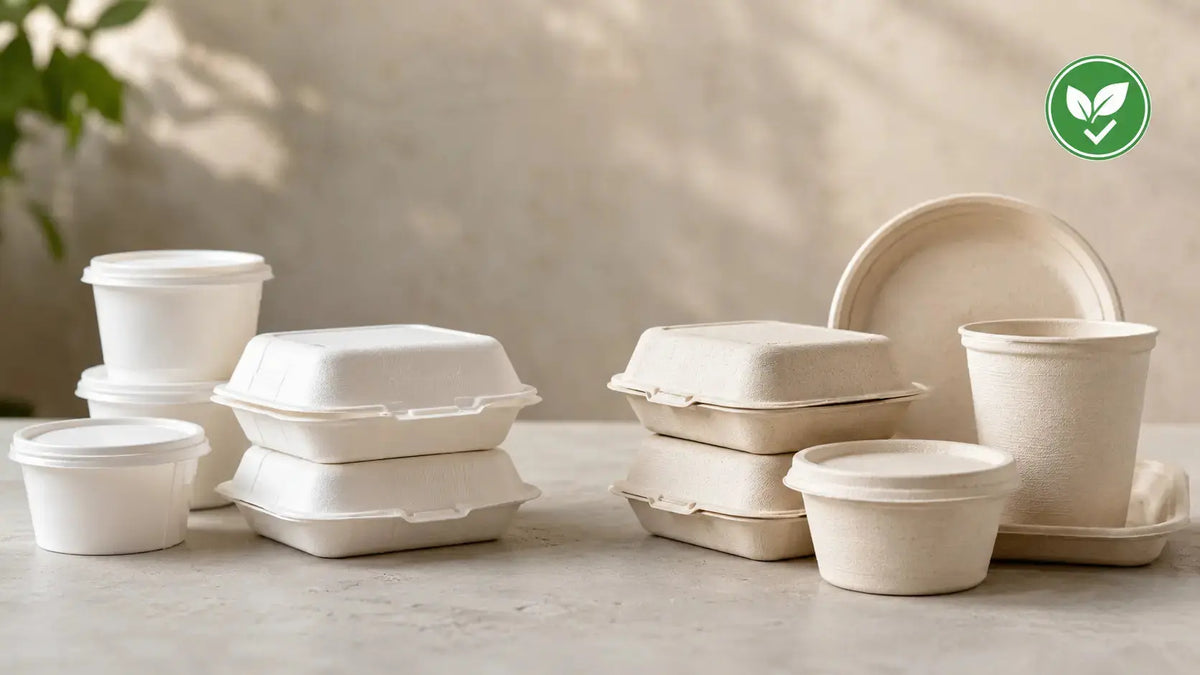
You grab a coffee cup labeled "compostable" and feel good about your choice. But when you get home, a question pops up: can you actually toss it in your backyard compost bin? The answer depends on one crucial detail, whether that item is home compostable or commercially compostable. Understanding the difference helps you dispose of products correctly and avoid unintentionally sending "green" packaging to a landfill.
What does "Compostable" actually mean?
A compostable product is designed to break down into natural elements — water, carbon dioxide, and nutrient-rich biomass, without leaving toxic residue behind. However, "compostable" is an umbrella term, and not all compostable materials break down under the same conditions.
That's where the two main categories come in: home compostable and commercially (or industrially) compostable.
Home compostable: Backyard-friendly breakdown
Home compostable products are engineered to decompose in the conditions of a typical backyard compost pile, lower temperatures (usually 68–86°F), variable moisture, and slower microbial activity. Think of items like uncoated paper, certain plant-based films, food scraps, and yard trimmings.
Because backyard piles are less controlled, home compostable materials must be able to break down without any special help, typically within 6 to 12 months. Certifications like TÜV Austria's "OK compost HOME" indicate a product has been tested for these real-world conditions.
Commercially compostable: Built for industrial facilities
Commercially compostable products require the conditions of an industrial composting facility to fully decompose. These facilities maintain sustained high temperatures (131–160°F), controlled humidity, regular aeration, and specialized microbial activity that a backyard pile simply can't replicate.
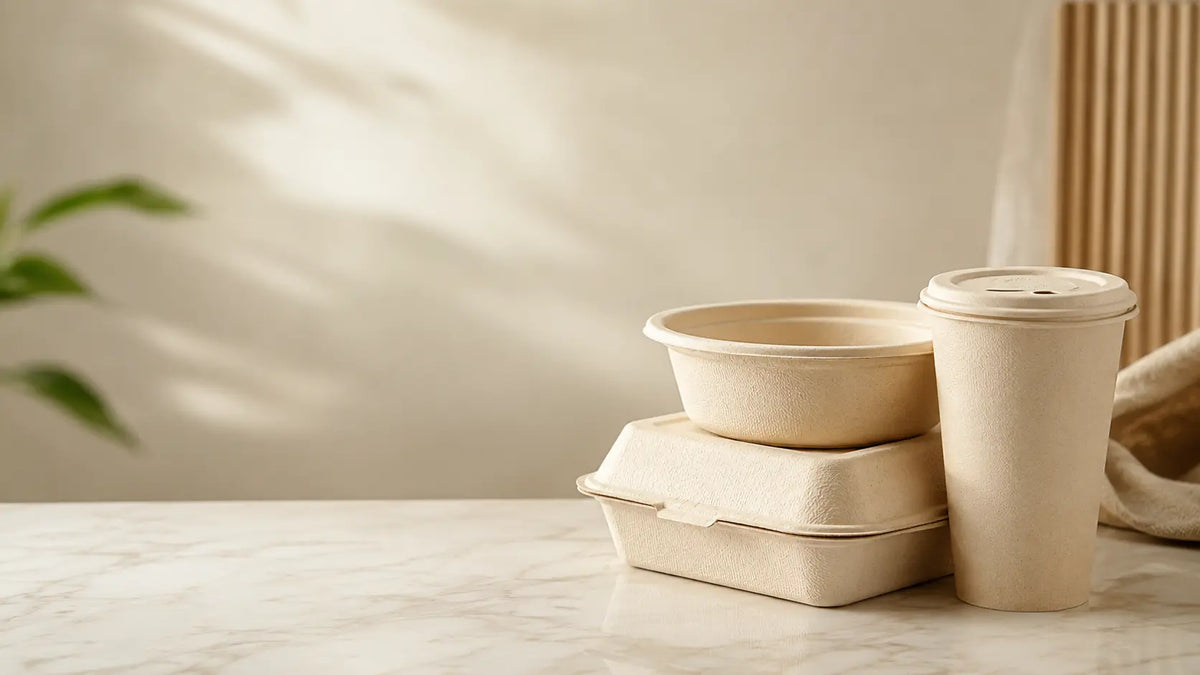
Common examples include PLA (polylactic acid) cups, bioplastic cutlery, compostable coffee pods, and many food-service containers. In the United States, the BPI (Biodegradable Products Institute) certification, based on ASTM D6400 and ASTM D6868 standards, is the most recognized label for commercially compostable items.
Here's the catch: if a commercially compostable cup ends up in your backyard bin, it may sit there for years, barely changing. And if it ends up in a landfill, it can't break down properly either.
Key differences at a glance
The distinction comes down to three factors. First, temperature: industrial facilities reach heat levels a home pile never will. Second, time: commercial composting breaks materials down in weeks, while home composting takes months. Third, infrastructure: commercially compostable items depend on access to a facility — and only a fraction of US communities currently offer curbside compost collection.
How to dispose of each one correctly
Before tossing a compostable item, check the label. If it says "home compostable" or carries the OK compost HOME seal, your backyard bin is fine. If it's BPI-certified or simply says "compostable," it likely needs an industrial facility. Use resources like FindAComposter.com or check with your local municipality to see if commercial composting is available near you. If it isn't, contact the brand — many companies offer mail-back programs.
"Compostable" doesn't automatically mean backyard ready. Home compostable products break down naturally in your own pile, while commercially compostable items need the high heat and controlled conditions of an industrial facility. Knowing the difference — and reading certifications like BPI and OK compost HOME, ensures your eco-friendly choices actually deliver on their promise. When in doubt, check the label, check your local facilities, and compost with confidence.